Skip to content

Andrew Planck

Astronomer, Teacher, Musician

Menu

  • Home
  • About
  • Shop
    • Cart
    • Checkout
  • Blog
  • Services
  • Resources
  • Contact

Unusual Features on the Moon

Pythagoras: Complex Moon Crater with Two Central Mountain Peaks

Pythagoras complex moon crater

This week we will highlight the moon crater Pythagoras, viewable on Tuesday evening. Pythagoras1 : [NW/C3; L=63°W] There is only a brief period during each lunation when Pythagoras is visible. It is a complex crater with two central mountain peaks,

Andrew Planck July 11, 2022July 11, 2022 Craters on the Moon, Dates to Observe Objects on the Moon, Lunar Days in July, Unusual Features on the Moon No Comments Read more

“Valentine Dome” on the Moon located near Mare Serenitatus

Valentine Dome located on the moon in the N.W. section of Mare Serenitatus

This week we will highlight a feature informally called the “Valentine Dome” located in the N.W. section of Mare Serenitatus. Valentine Dome: [NE/F11; L=10°E] Keep a close eye on the movement of the terminator, and when it just touches the

Andrew Planck July 4, 2022June 29, 2022 Domes on the Moon, Lunar Days in July, Unusual Features on the Moon No Comments Read more

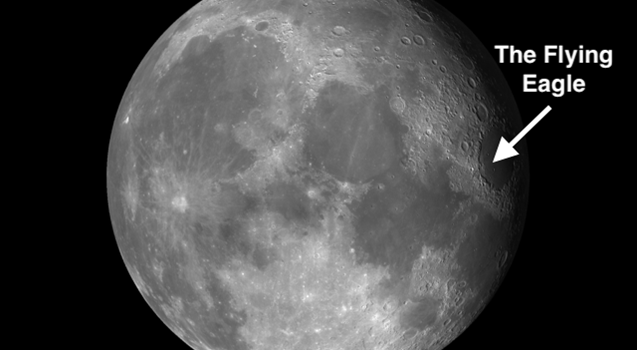
The Flying Eagle on the Moon – Wrinkle Ridge Dorsum Oppel

The Flying Eagle and Mare Crisium on the moon

This week we will highlight the wrinkle ridge Dorsum Oppel, a feature informally known as “the Flying Eagle,” viewable on Saturday evening. The Flying Eagle: [NE/H15] As the lava cooled following the impact that created Mare Crisium, a series of

Andrew Planck June 27, 2022 Lunar Days in June, Unusual Features on the Moon, Wrinkle Ridge on the moon No Comments Read more

Promontorium Agarum and the First Supermoon of 2022

Promontorium Agarum

The week of June 13-19 takes us from Day 14 to Day 20. This week we will highlight the feature known as Promontorium Agarum on Mare Crisium, viewable in the early morning hours of Wednesday, June 15. Promontorium Agarum: [NE/H16;

Andrew Planck June 13, 2022June 13, 2022 Dates to Observe Objects on the Moon, Lunar Days in June, Unusual Features on the Moon No Comments Read more

Moon Crater Longomontanus: Exception to the Rule About Moon Crater Age

moon crater Longomontanus

The week of May 23-29 takes us from Day 24 to Day 29. This week we will highlight the moon crater Longomontanus, viewable on Tuesday morning just before sunrise. [SW/P7; L=22°W] Take a look at Longomontanus and before reading further,

Andrew Planck May 23, 2022May 21, 2022 Craters on the Moon, Dates to Observe Objects on the Moon, Lunar Days in May, Unusual Features on the Moon No Comments Read more

Brightest Spot on the Moon: Moon Crater Aristarchus

moon crater Aristarchus

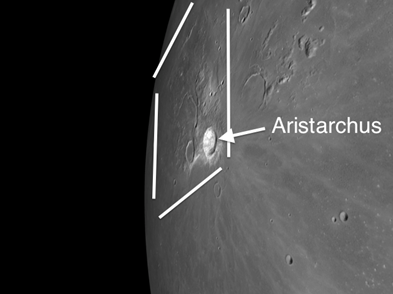
The week of May 16-22 takes us from Day 16 to Day 23. This week we will highlight the moon crater Aristarchus. Aristarchus: [NW/G5; L=47°W] The moon crater Aristarchus is the brightest spot on the Moon. It is so bright

Andrew Planck May 16, 2022May 15, 2022 Dates to Observe Objects on the Moon, Lunar Days in May, Unusual Features on the Moon No Comments Read more

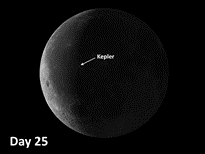
Moon Crater Kepler: Rays Intertwine with Copernicus and Aristarchus

moon crater Kepler

The week of April 25 – May 1st takes us from Day 25 to Day 1. This week we will highlight the moon crater Kepler, viewable before sunrise on Tuesday. Kepler1: [NW/J6; L=38°W] Kepler is a substantial 20-mile crater with

Andrew Planck April 25, 2022April 24, 2022 Craters on the Moon, Dates to Observe Objects on the Moon, Lunar Days in April, Unusual Features on the Moon 1 Comment Read more

Triesnecker Rilles on the Moon: A Complex System Resembling a Railway Switchyard

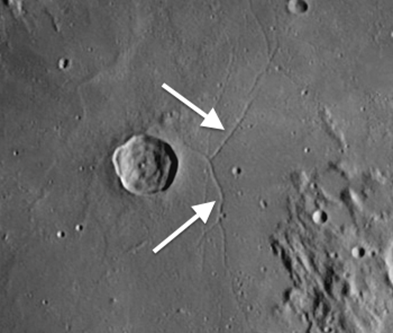
Triesnecker rilles on the moon

The week of April 4-10 takes us from Day 4 to Day 9. This week we will highlight the Triesnecker rilles on the moon and an object informally known as the “Lunar X.” Triesnecker Rilles: [NE/J10] What a great place

Andrew Planck April 4, 2022April 3, 2022 Dates to Observe Objects on the Moon, Lunar Days in April, Rilles on the Moon, Unusual Features on the Moon No Comments Read more

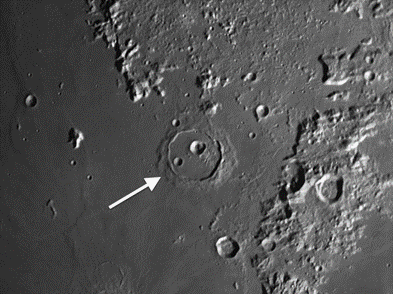
Moon Crater Cassini – Created on Imbrium Floor Before Lavas Started to Flow

Moon Crater Cassini created on Imbrium floor

The week of February 21-27 takes us from Day 20 to Day 26. This week we will highlight the moon crater Cassini, viewable early Tuesday morning in the NE quadrant of the Field Map. Cassini: [NE/E10; L=5°E] Can you tell

Andrew Planck February 21, 2022February 20, 2022 Craters on the Moon, Dates to Observe Objects on the Moon, Lunar Days in February, Unusual Features on the Moon No Comments Read more

The Flying Eagle on the Moon: Wrinkle Ridge Dorsum Oppel

wrinkle ridge Dorsum Oppel on the moon

The week of February 14-20 takes us from Day 13 to Day 19. This week we will highlight the wrinkle ridge Dorsum Oppel, a feature informally known as “the Flying Eagle,” viewable on Thursday & Friday night. The Flying Eagle:

Andrew Planck February 14, 2022February 14, 2022 Lunar Days in February, Uncategorized, Unusual Features on the Moon, Wrinkle Ridge on the moon No Comments Read more
  • « Previous
  • Next »

Categories

Fill out my online form.

It is highly recommended that you get a copy of Sky and Telescope's Field Map of the Moon, the very finest Moon map available for use at the telescope. It is available for $10.95 at www.skyandtelescope.com and on Amazon. All features mentioned in this blog will be keyed to the grid on the Field Map and will look like this: Plato: [NW/D9]

Credits: Courtesy of Gray Photography of Corpus Christi, Texas Lunar photos: NASA / USGS / BMDO / LROC / ASU / DLR / LOLA / Moon Globe. Used by permission

  • Author
  • Recent Posts
Andrew Planck
Andrew Planck
Author and Astronomer Andrew Planck shepherds you to the moon and its mysteries of intrigue and surprise. Learn about the moon’s most fascinating objects, understand how the moon was formed and the names of many of the craters … and why they honor individuals who have changed the course of history.
Andrew Planck
Latest posts by Andrew Planck (see all)
  • Petavius: Floor-Fractured Moon Crater - June 15, 2026
  • Mare Humorum: “Sea of Moisture” Basin One of Best Examples of Subsidence - June 8, 2026
  • Moon Crater Bailly – Over 3 Billion Years Old - June 1, 2026
Copyright © 2026 Andrew Planck. All rights reserved. Theme Spacious by ThemeGrill. Powered by: WordPress.